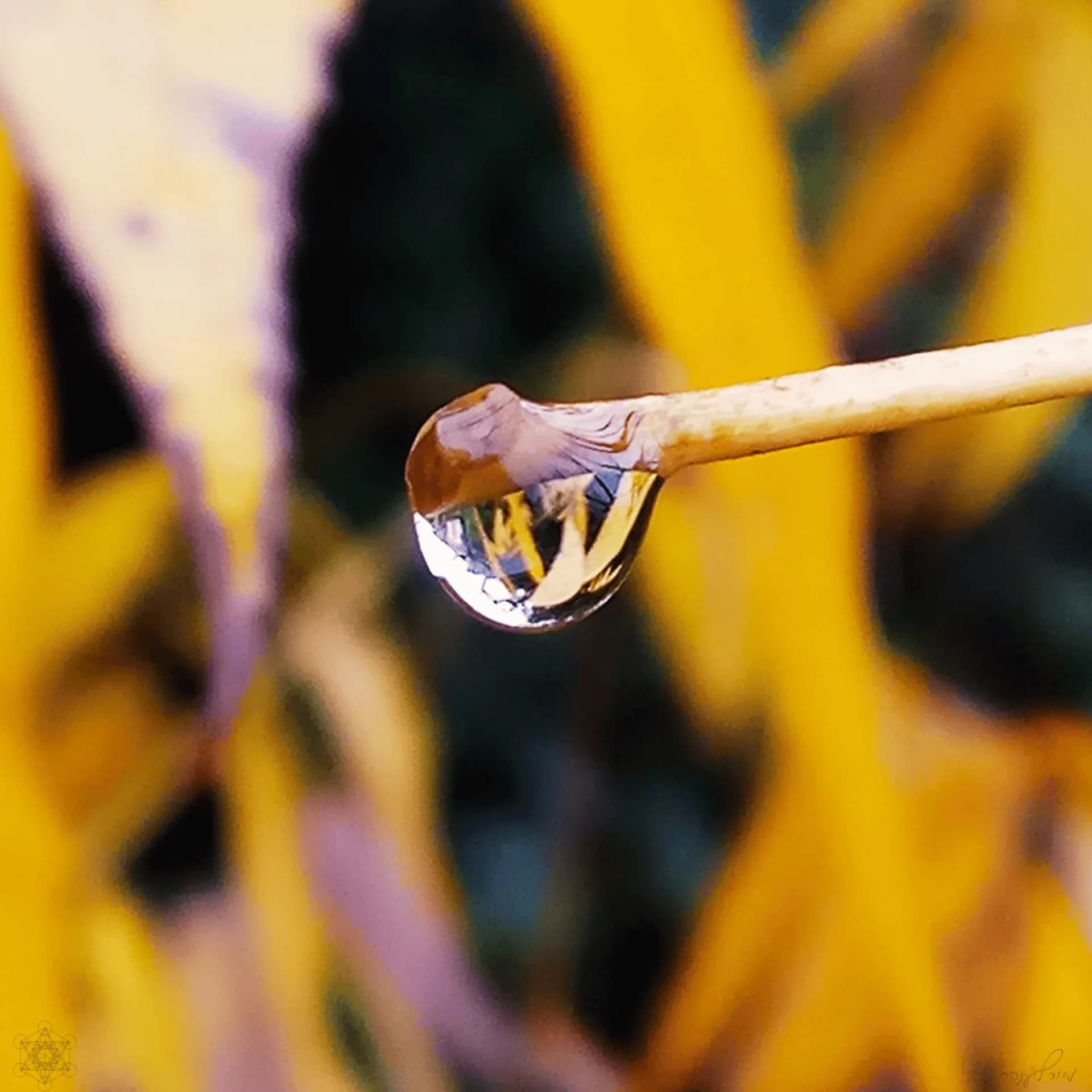


Hanging on the Fall
"And you were like a watered garden and a spring of water whose waters never fail." A single drop hangs on the tip of a branch, a moment before it falls. It seems fragile and ephemeral, suspended between grasp and release, and yet within its tiny body an entire world is reflected. It is a delicate moment of tension and pause - the drop is still here, but already carries within it the movement of the fall. It is precisely in this hanging moment that the presence of the source is revealed. The small drop does not stand alone; it is part of an endless abundance. The illuminated reflection within it transforms the tiny dot into a kind of watered garden - a place where the little holds much within it, and the drop becomes a lens to the source of life. Thus the verse gives the fragile moment a different validity: not loss or impermanence, but the loyalty of a source. The water can move, be released, fall only: “water whose waters do not fail.” The drop depends on the fall – and the water continues to move, to saturate the soil of the garden. The waters of the source do not cease. Dependent on the fall is not the moment when something falls, but the moment between grasping and releasing; the moment when one can discover that even when the drop leaves the branch, the source from which it came does not stop flowing. The blessing that lies in all moments of transition, uncertainty and release, the source does not cease. The falling drop will find its place, the water will continue to flow, saturate and nourish, and every release can be a continuation of the flow and not an end. Even in the most delicate and dependent points, the source of blessing and faithfulness will not cease to illuminate, water and fertilize, and to infuse blessing into all the works of our hands. May we be like a well-watered garden that brings forth life in abundance, and like a spring of water whose waters will not fail. Photograph, Paper, Glass, Frame 40x40 cm ,60x60 cm ,80x80 cm
Quantity
Michal Inbar
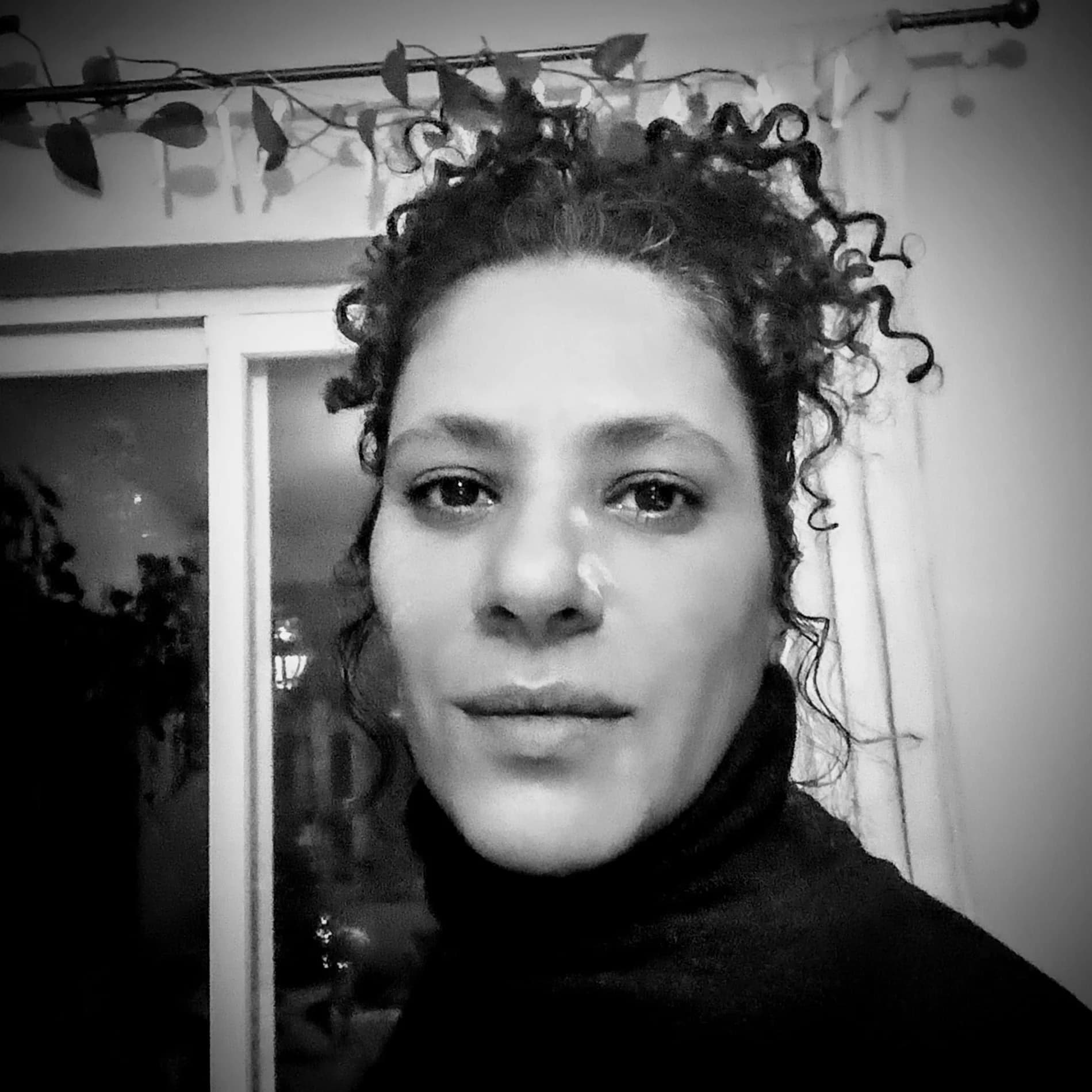
Michal Inbar (married with 4 children) creates life through nature. Based in Gita, a communal settlement in the Western Galilee right on the edge of a wild nature reserve, Michal’s childhood was shaped by her Yemeni grandfather. He gifted her a deep inner peace and the ability to observe and converse with creation. In her youth, she danced, capturing life through her eyes out of living, breathing movement. About six years ago, she decided to uncover the secrets of nature and elevate them through art. The combination of time and place seen through Michal’s lens conveys a sense of connection to a space and time that live within the observer. These days, Michal is establishing "Beit Bracha" (House of Blessing)—a creative sanctuary that explores the hidden and the secret within the revealed, allowing viewers to open whatever window reveals itself to them at that moment. Revealing the Hidden: A Look Within My art is born out of a desire and a calling to discover beauty and an anchor within a chaotic, challenging, and turbulent daily reality. In a space where the soul searches for meaning, the camera serves as my tool for inner journeys of listening and discovery—moments where a vision emerges, reminding us of another quiet, internal world that exists right here within our own. I invite the observer on a journey of shifting consciousness through two main movements. The first is macro photography, penetrating deep into the heart of things—into tiny textures and secrets that often escape the human eye. The second is a wider, more open view of the landscape and space. At times, my eye is drawn to objects whose initial identity is not immediately clear. By doing so, they invite the viewer to peel back layers of habit, look anew, and discover a fresh wonder within the familiar. Each photograph is presented in two parallel formats: one stands alone as a clean image, and the other is accompanied by text—a verse from spiritual and sacred writings, or from internal poetry that rises from the depth of things. This combination is not meant to explain the image, but rather to create a space for resonance. The image and the word are interwoven to provoke thought, open the heart, and allow the observer to step inside—beyond what is visible to the eye, but revealed to the subtle heart.
Michal Inbar (married with 4 children) creates life through nature. Based in Gita, a communal settlement in the Western Galilee right on the edge of a wild nature reserve, Michal’s childhood was shaped by her Yemeni grandfather. He gifted her a deep inner peace and the ability to observe and converse with creation. In her youth, she danced, capturing life through her eyes out of living, breathing movement. About six years ago, she decided to uncover the secrets of nature and elevate them through art. The combination of time and place seen through Michal’s lens conveys a sense of connection to a space and time that live within the observer. These days, Michal is establishing "Beit Bracha" (House of Blessing)—a creative sanctuary that explores the hidden and the secret within the revealed, allowing viewers to open whatever window reveals itself to them at that moment. Revealing the Hidden: A Look Within My art is born out of a desire and a calling to discover beauty and an anchor within a chaotic, challenging, and turbulent daily reality. In a space where the soul searches for meaning, the camera serves as my tool for inner journeys of listening and discovery—moments where a vision emerges, reminding us of another quiet, internal world that exists right here within our own. I invite the observer on a journey of shifting consciousness through two main movements. The first is macro photography, penetrating deep into the heart of things—into tiny textures and secrets that often escape the human eye. The second is a wider, more open view of the landscape and space. At times, my eye is drawn to objects whose initial identity is not immediately clear. By doing so, they invite the viewer to peel back layers of habit, look anew, and discover a fresh wonder within the familiar. Each photograph is presented in two parallel formats: one stands alone as a clean image, and the other is accompanied by text—a verse from spiritual and sacred writings, or from internal poetry that rises from the depth of things. This combination is not meant to explain the image, but rather to create a space for resonance. The image and the word are interwoven to provoke thought, open the heart, and allow the observer to step inside—beyond what is visible to the eye, but revealed to the subtle heart.


Similar Artworks


