

"A Pooling Gaze" (Kivui Ayin)
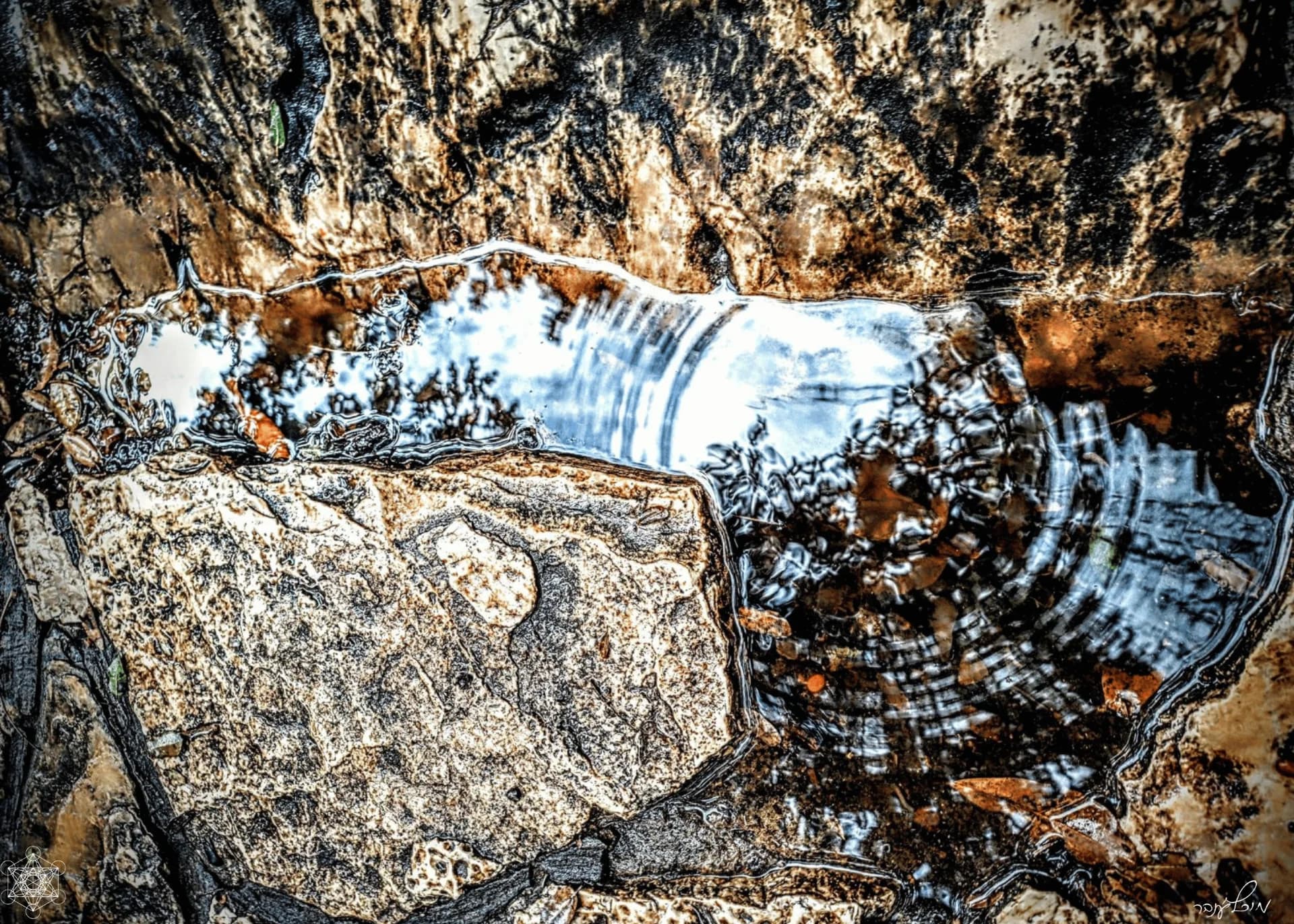
"The Lord looks down from heaven upon the children of men." (Psalms 14:2) The sky is vast, infinite, and distant—impossible to truly grasp. Yet, in this image, a wondrous thing happens: the infinite seems to gently condense into a single, small, and fragile point—a narrow puddle of water pooled between the rocks. Within this tiny space, the sky, the clouds, and the light are all reflected. The water becomes a pupil, and the pupil becomes an opening through which the infinite finds a home inside the smallest place. The gaze does not stay distant in the heavens; it narrows, comes down, and settles into the earth, reaching a hidden spot among the stones. Precisely in this low, narrow, and hard place, a wide space of vision opens up. The eye is a place of receiving and holding—a point where a great light takes shape and meets reality. The same is true here: the puddle is not just water reflecting the sky; it becomes a vessel through which the sky can be seen. The pooling—water gathers within the narrow strait, and from this coming together, an eye opens. The small space does not contradict the infinite—it becomes the very tool for its revelation. The blessing hidden in this image is the knowledge and hope that even within the narrowest and hardest place, a space of vision, a good eye, and living water can open up. Sometimes, the great light gathers into one tiny point so that we can receive it, see it, and feel it. The sky condenses into the water, and the infinite becomes close. The eye opening within the rock reminds us that even within the narrow straits, there is room for a gaze, for light, and for connection. "Kivui Ayin" is the moment when the infinite becomes visible within the smallest possible point. Photograph, Paper, Glass, Frame 60x40 cm 70x50 cm,90x60 cm, 100x70 cm
Quantity
Michal Inbar
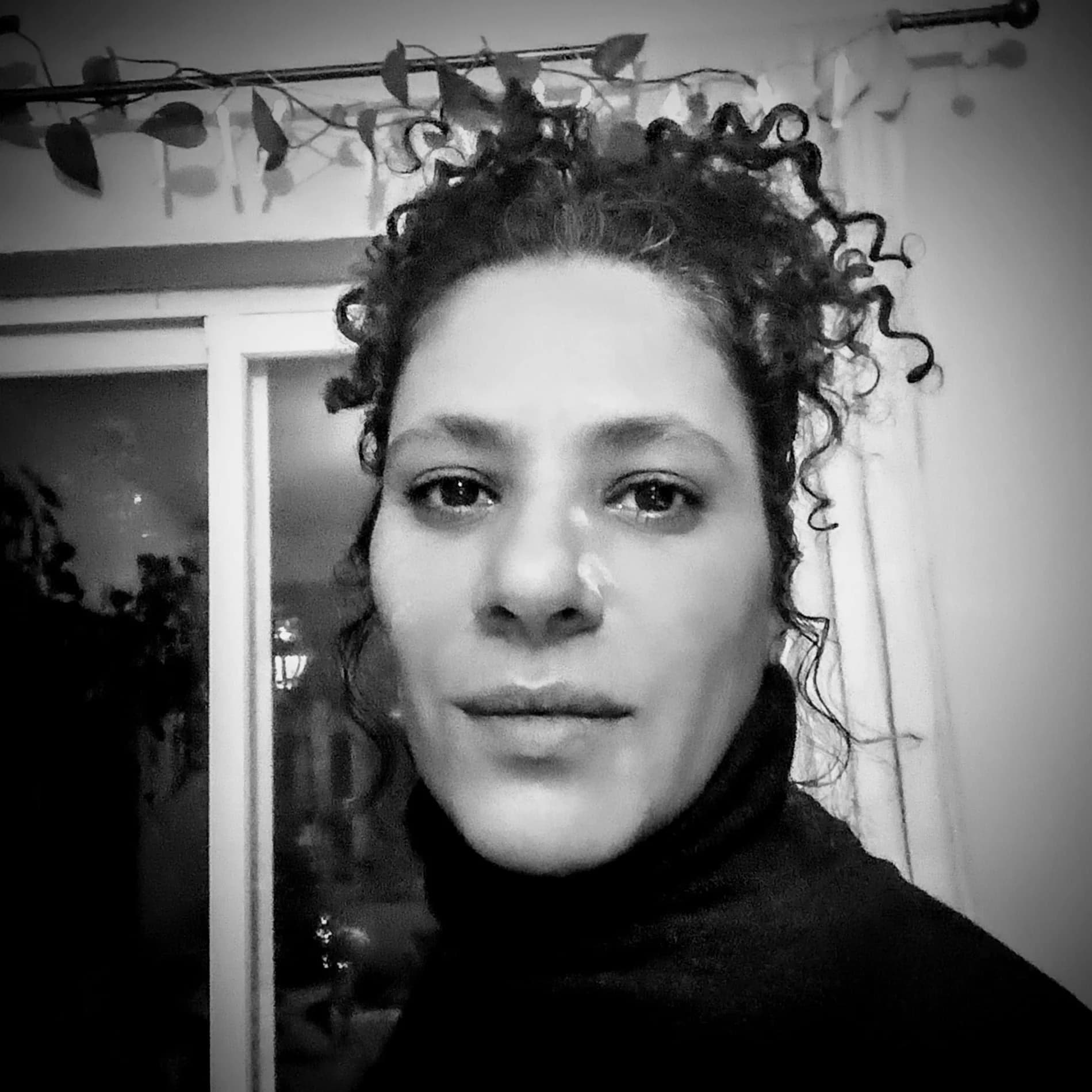
Michal Inbar (married with 4 children) creates life through nature. Based in Gita, a communal settlement in the Western Galilee right on the edge of a wild nature reserve, Michal’s childhood was shaped by her Yemeni grandfather. He gifted her a deep inner peace and the ability to observe and converse with creation. In her youth, she danced, capturing life through her eyes out of living, breathing movement. About six years ago, she decided to uncover the secrets of nature and elevate them through art. The combination of time and place seen through Michal’s lens conveys a sense of connection to a space and time that live within the observer. These days, Michal is establishing "Beit Bracha" (House of Blessing)—a creative sanctuary that explores the hidden and the secret within the revealed, allowing viewers to open whatever window reveals itself to them at that moment. Revealing the Hidden: A Look Within My art is born out of a desire and a calling to discover beauty and an anchor within a chaotic, challenging, and turbulent daily reality. In a space where the soul searches for meaning, the camera serves as my tool for inner journeys of listening and discovery—moments where a vision emerges, reminding us of another quiet, internal world that exists right here within our own. I invite the observer on a journey of shifting consciousness through two main movements. The first is macro photography, penetrating deep into the heart of things—into tiny textures and secrets that often escape the human eye. The second is a wider, more open view of the landscape and space. At times, my eye is drawn to objects whose initial identity is not immediately clear. By doing so, they invite the viewer to peel back layers of habit, look anew, and discover a fresh wonder within the familiar. Each photograph is presented in two parallel formats: one stands alone as a clean image, and the other is accompanied by text—a verse from spiritual and sacred writings, or from internal poetry that rises from the depth of things. This combination is not meant to explain the image, but rather to create a space for resonance. The image and the word are interwoven to provoke thought, open the heart, and allow the observer to step inside—beyond what is visible to the eye, but revealed to the subtle heart.
Michal Inbar (married with 4 children) creates life through nature. Based in Gita, a communal settlement in the Western Galilee right on the edge of a wild nature reserve, Michal’s childhood was shaped by her Yemeni grandfather. He gifted her a deep inner peace and the ability to observe and converse with creation. In her youth, she danced, capturing life through her eyes out of living, breathing movement. About six years ago, she decided to uncover the secrets of nature and elevate them through art. The combination of time and place seen through Michal’s lens conveys a sense of connection to a space and time that live within the observer. These days, Michal is establishing "Beit Bracha" (House of Blessing)—a creative sanctuary that explores the hidden and the secret within the revealed, allowing viewers to open whatever window reveals itself to them at that moment. Revealing the Hidden: A Look Within My art is born out of a desire and a calling to discover beauty and an anchor within a chaotic, challenging, and turbulent daily reality. In a space where the soul searches for meaning, the camera serves as my tool for inner journeys of listening and discovery—moments where a vision emerges, reminding us of another quiet, internal world that exists right here within our own. I invite the observer on a journey of shifting consciousness through two main movements. The first is macro photography, penetrating deep into the heart of things—into tiny textures and secrets that often escape the human eye. The second is a wider, more open view of the landscape and space. At times, my eye is drawn to objects whose initial identity is not immediately clear. By doing so, they invite the viewer to peel back layers of habit, look anew, and discover a fresh wonder within the familiar. Each photograph is presented in two parallel formats: one stands alone as a clean image, and the other is accompanied by text—a verse from spiritual and sacred writings, or from internal poetry that rises from the depth of things. This combination is not meant to explain the image, but rather to create a space for resonance. The image and the word are interwoven to provoke thought, open the heart, and allow the observer to step inside—beyond what is visible to the eye, but revealed to the subtle heart.


Similar Artworks


