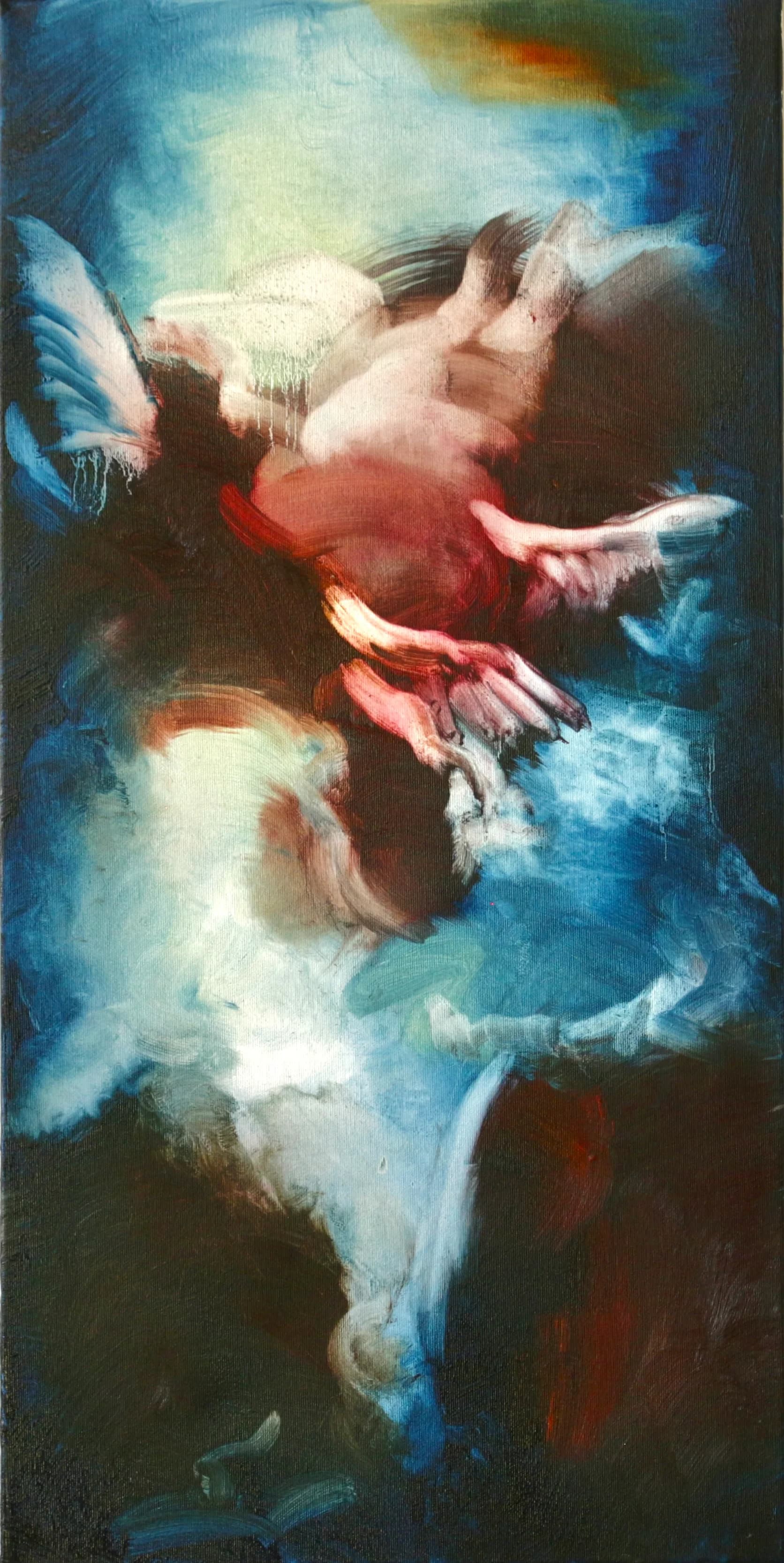
Vision no. 8
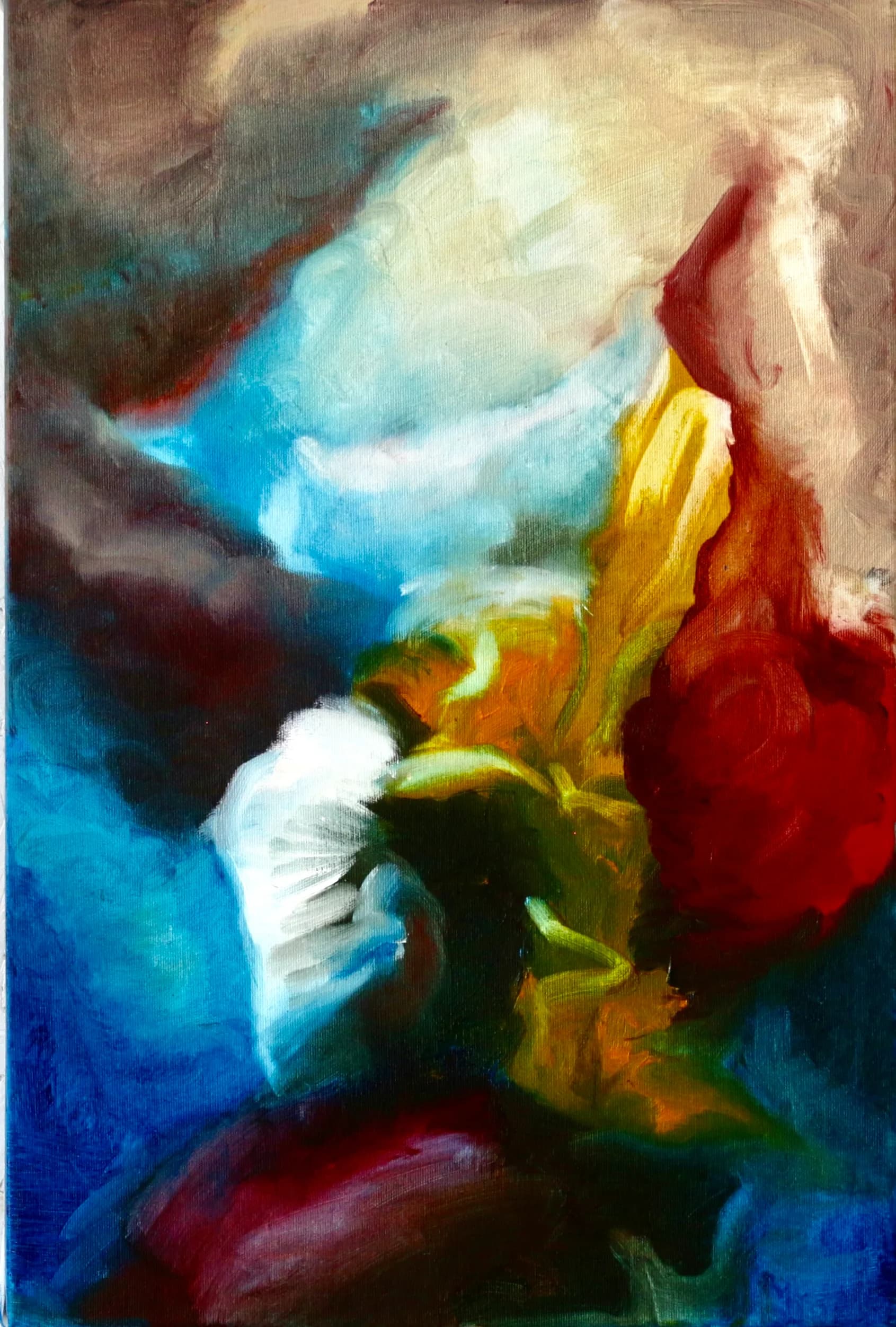
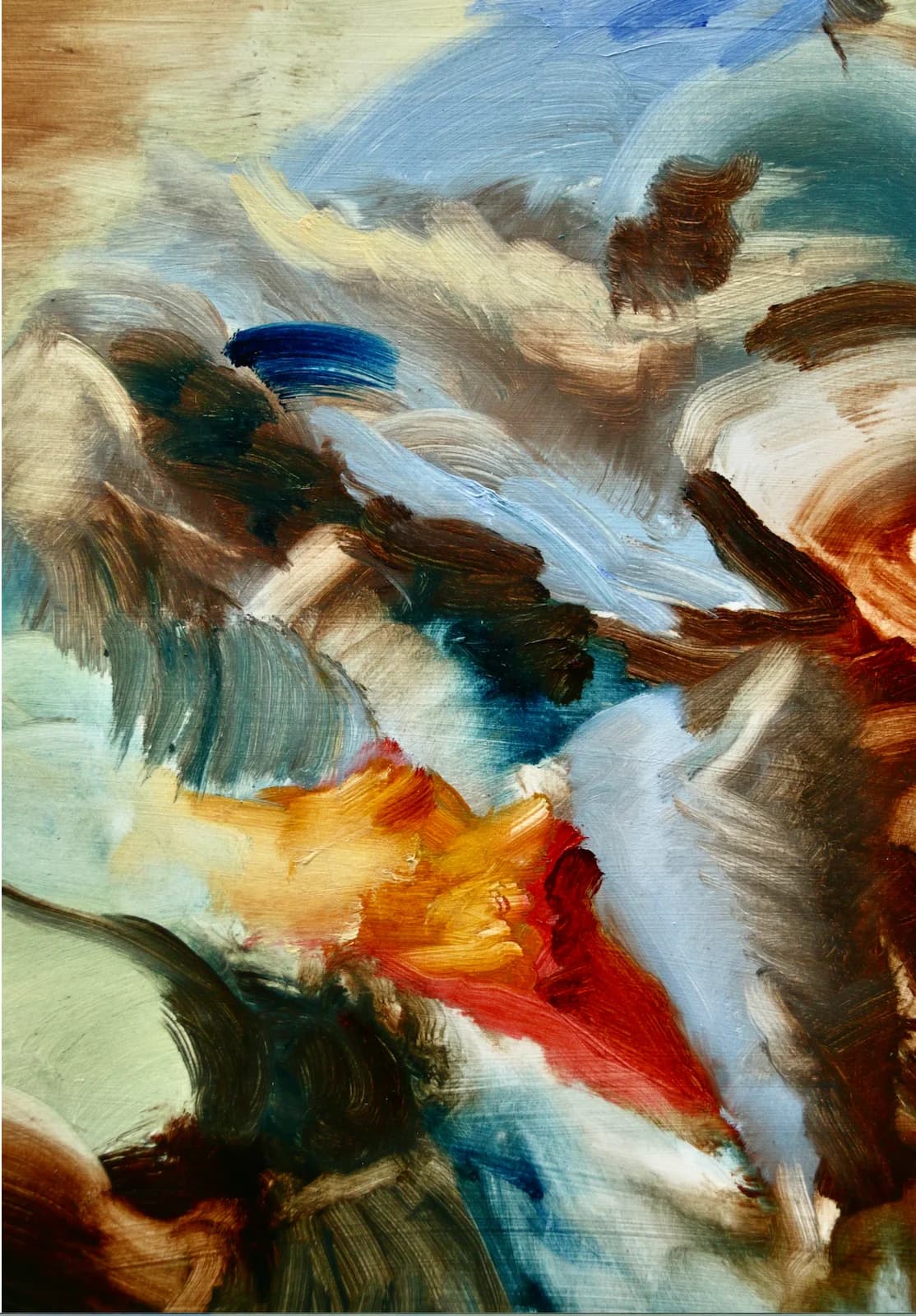
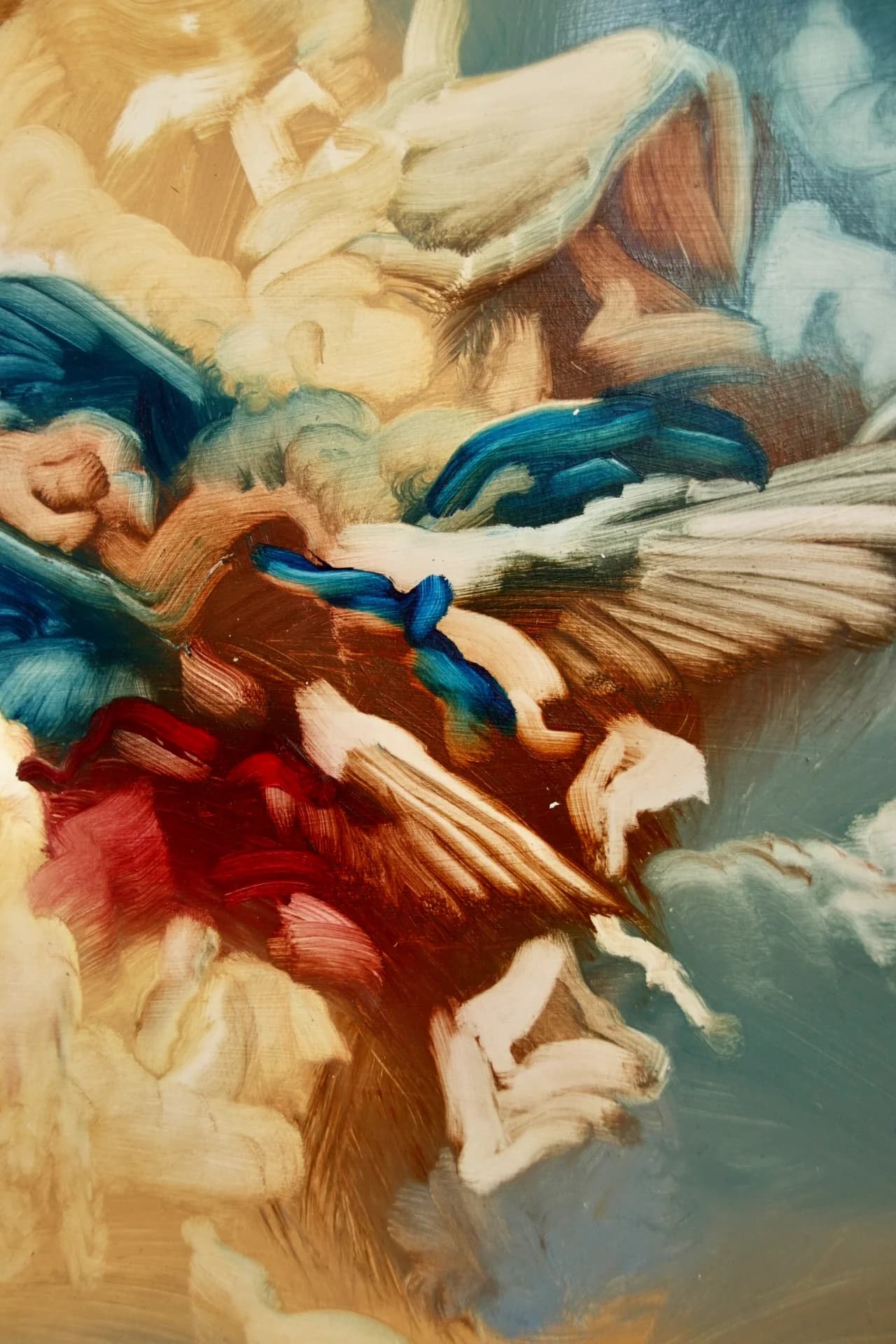
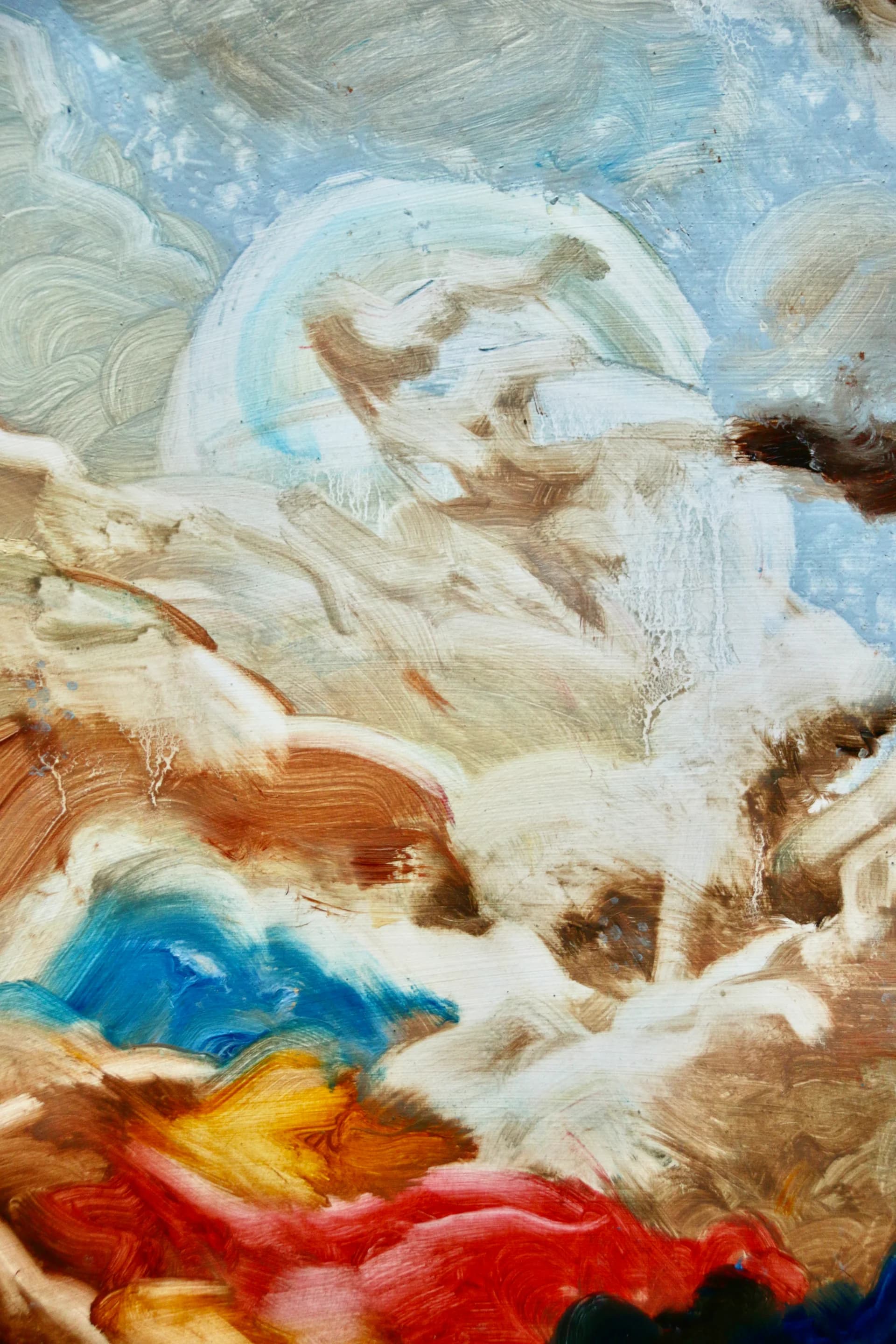
Interlaced human forms emerge from a turbulent field of blue, white, umber, and red, with extended hands guiding the eye through the vertical composition. Loose oil brushwork, softened contours, and layered passages allow bodies and surrounding color to merge. The result is expressive and dreamlike, bringing dramatic movement to a living room, office, or dining area.
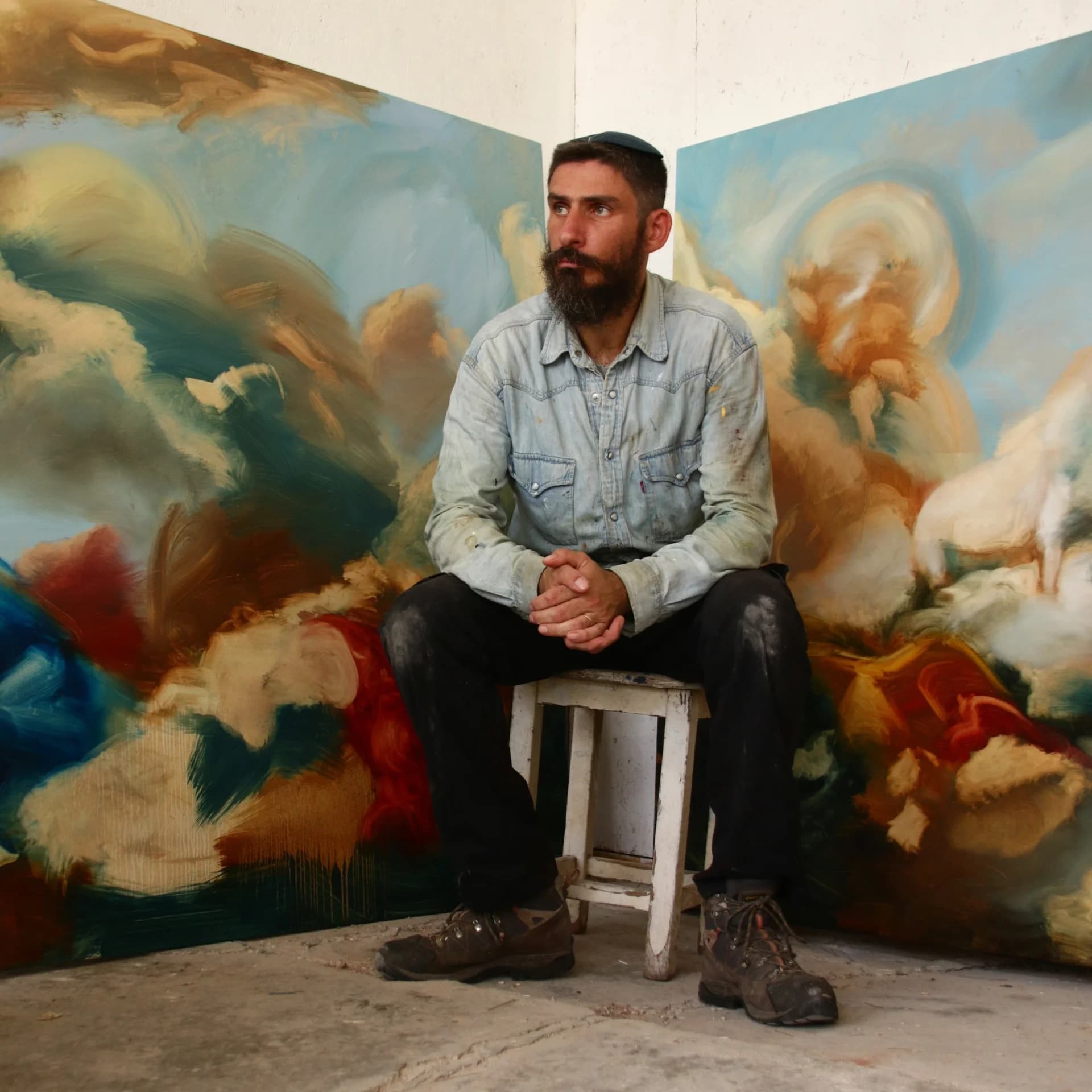
Sam Griffin
My work begins with the Bible — its stories, prophecies, and visions. I do not approach these texts in order to illustrate biblical scenes, but as a way of thinking through the experience of searching for the divine. Throughout the Bible, revelation is never permanent. The prophet receives a vision, and then returns to darkness. God reveals Himself, but also conceals Himself. Moments of clarity and inspiration give way to distance, doubt, and silence. I am drawn to this tension: the desire to draw close to something that always remains, to some degree, beyond our grasp. My painting process follows a similar movement. I build the surface through layers of paint, then erase, scrape, and remove them until light and form begin to emerge. The image is not simply placed onto the canvas, but uncovered from beneath the surface. What is revealed remains inseparable from what is concealed. The paintings exist between abstraction and figuration, darkness and light, revelation and concealment. Forms appear, disappear, and return without ever becoming entirely fixed or resolved. For me, this is also central to religious experience. There are moments of inspiration, clarity, and profound gratitude — moments when, for an instant, everything seems illuminated from within. But these moments are difficult to hold onto. They dissolve back into ordinary life, into routine and the demands of the everyday, leaving behind a longing to return to them. Perhaps this is also the prophet’s journey: not to possess revelation, but to continue searching for it. My work inhabits this space between the moment something is revealed and the moment it disappears again.
My work begins with the Bible — its stories, prophecies, and visions. I do not approach these texts in order to illustrate biblical scenes, but as a way of thinking through the experience of searching for the divine. Throughout the Bible, revelation is never permanent. The prophet receives a vision, and then returns to darkness. God reveals Himself, but also conceals Himself. Moments of clarity and inspiration give way to distance, doubt, and silence. I am drawn to this tension: the desire to draw close to something that always remains, to some degree, beyond our grasp. My painting process follows a similar movement. I build the surface through layers of paint, then erase, scrape, and remove them until light and form begin to emerge. The image is not simply placed onto the canvas, but uncovered from beneath the surface. What is revealed remains inseparable from what is concealed. The paintings exist between abstraction and figuration, darkness and light, revelation and concealment. Forms appear, disappear, and return without ever becoming entirely fixed or resolved. For me, this is also central to religious experience. There are moments of inspiration, clarity, and profound gratitude — moments when, for an instant, everything seems illuminated from within. But these moments are difficult to hold onto. They dissolve back into ordinary life, into routine and the demands of the everyday, leaving behind a longing to return to them. Perhaps this is also the prophet’s journey: not to possess revelation, but to continue searching for it. My work inhabits this space between the moment something is revealed and the moment it disappears again.
Similar Artworks